
This selection of mosques and synagogues are as diverse and beautiful as the faiths that built them.
Emin Minaret – Turfan, China

The Emin Minaret was built in 1777 by the local Uyghur population and is now the tallest minaret in China.
Wolleka Synagogue – Gondar, Ethiopia
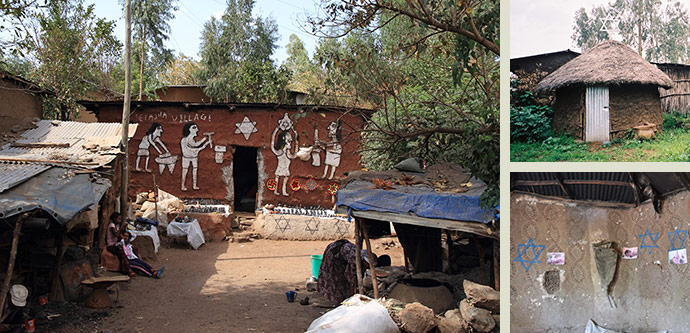
The village of Wolleka was an Ethiopian Jewish village that is now inhabited by the Falash Mura (the descendants of Jews who converted to Christianity), left behind after the mass emigration of the Beta Israel to Israel in the 80s and 90s.
Kalta-Minar Minaret – Khiva, Uzbekistan
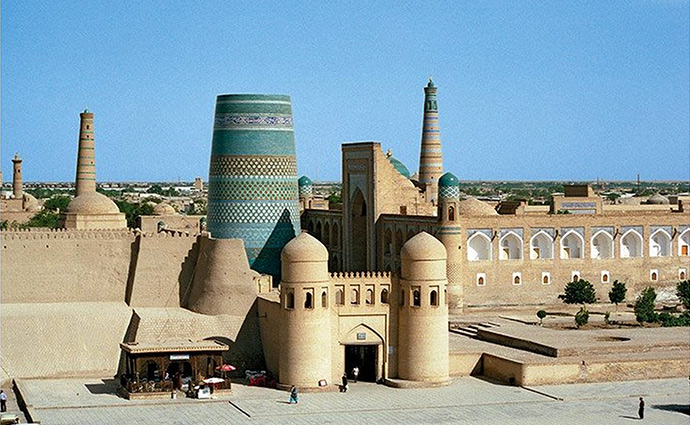
The Kalta-Minar Minaret was erected in the 19 century by Mukhammad Amin-Khan. The minaret is unique that it was never finished.
Zoharei Chama Synagogue – Jerusalem, Israel
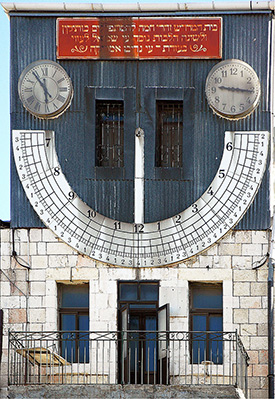
This Orthodox Jewish Synagogue was built by Rabbi Shmuel Levy between 1908 and 1917. The sundial (which looks like a smiley face), was installed to help locals to pray at the preferable times.
Xi’an Great Mosque – Shaanxi, China
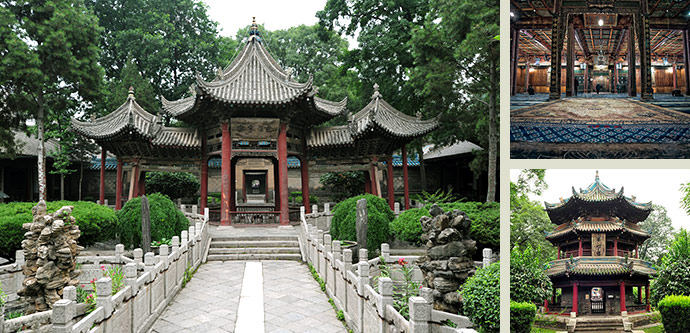
The Xi’an Great Mosque is one of the oldest masjids in the country. It was founded in 742, although most of the current building was constructed during in the 14th century.
Neue Synagogue – Berlin, Germany

The Neue Synagoge was built 1859–1866 as the main synagogue of the Berlin Jewish community. It was destroyed by the Nazis in World War 2 and the synagogue that stands there today is a reconstruction.
Al-Masjid al-Nabawi – Medina, Saudi Arabia
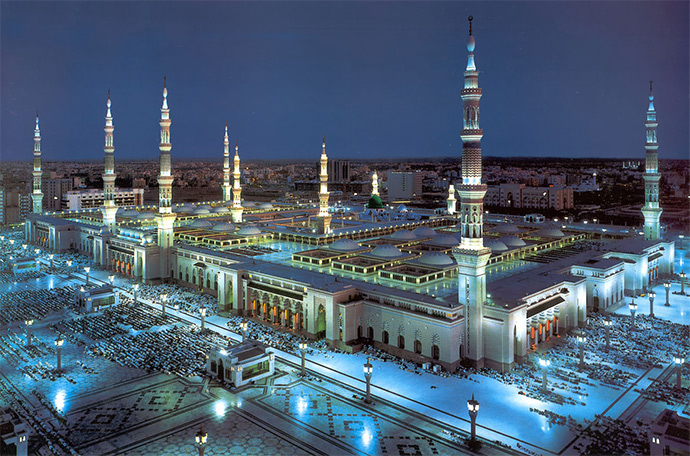
The mosque was founded by Muhammad SAW and is situated in the city of Medina. It is the second holiest site in Islam (the first being the Masjid al-Haram in Mecca). It was the second mosque built in history and is now one of the largest mosques in the world.
Terezin Secret Synagogue – Terezin Ghetto, Czech Republic
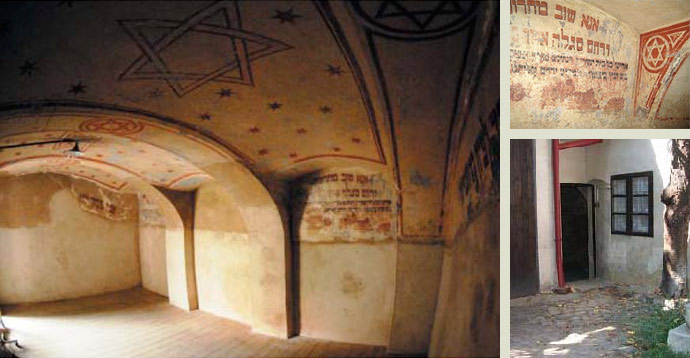
During the holocaust the Nazis forbade the Jews from performing religious services, but in the Terezin Ghetto a cantor named Artur Berlinger established and decorated a secret synagogue in 1942. One year late Artur was deported to Auschwitz, where he perished. His secret synagogue remained hidden until 1989 when the owners of the building finally reported it to the authorities (claiming they hadn’t done so earlier as they feared repercussions from the Communist regime).
Jami Ul-Alfar Mosque – Colombo, Sri Lanka
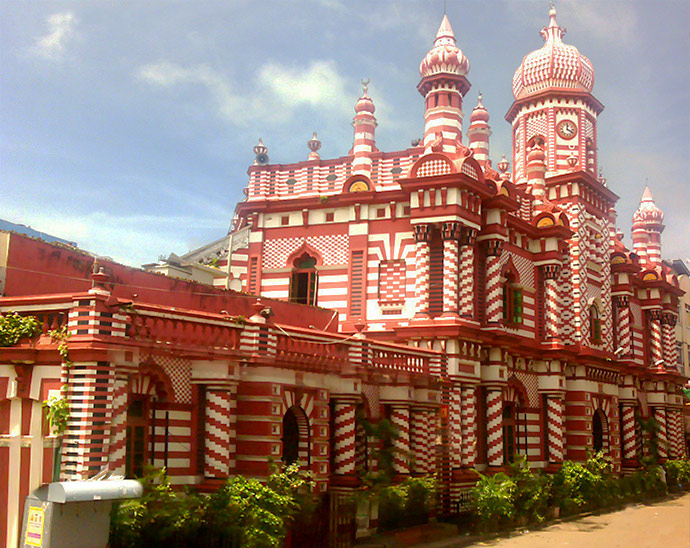
Although the mosque was only built in 1909 by the Pettah Muslim community, it is still one of the oldest mosques in Colombo.
Zedek ve Shalom Synagogue – Paramaribo, Suriname

In this photograph we see the mosque (left) and synagogue (right) of South American city, Paramaribo.
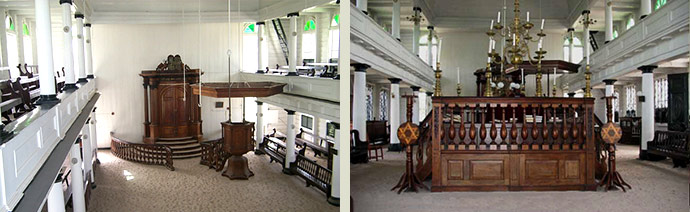
One of the most interesting features of the synagogue is the sand covered floor. Today there are five synagogues with sand covered floors – the most common explanation for them is that the practice originated in the early 1600s in the northern region of Brazil, where Spanish-Portuguese conversos (forced Jewish converts to catholicism) tried to secretly practice their Judaism. Devout Jews covered the floors of their prayer rooms with sand to muffle the footsteps in the hope it would avoid the hostile eyes of Iberian ecclesiastical authorities.
Registan Square Madrasahs – Samarkand, Uzbekistan
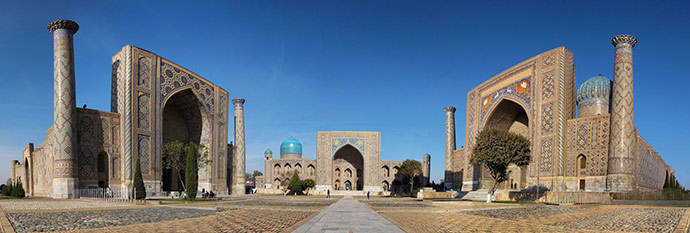
The three madrasahs of the Registan are: the Ulugh Beg Madrasah (left) – built 1417–1420, the Tilya-Kori Madrasah (middle) – built 1646–1660 and the Sher-Dor Madrasah (right) – built 1619–1636.
Ibn Shushan Synagogue (Now Santa Maria La Blanca Church) – Toledo, Spain
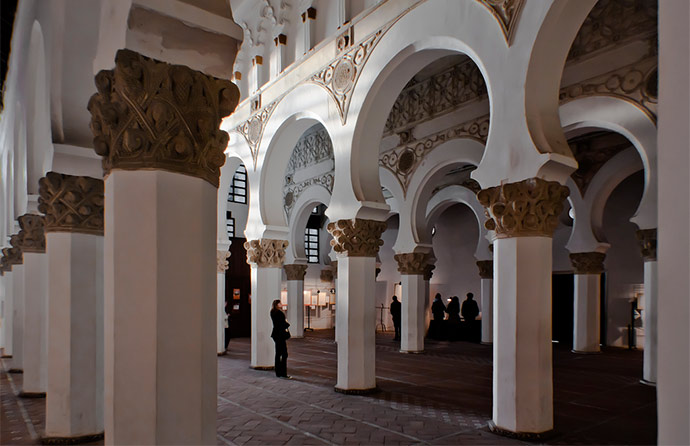
Erected in 1180, it is disputably the oldest still standing synagogue building in Europe. It is now owned and preserved as a museum by the Catholic Church.
Green Lane Masjid – Birmingham, England
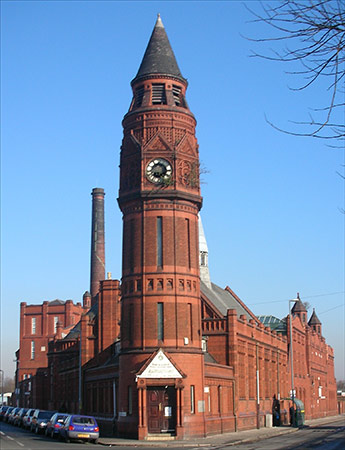
Established in the 1970s, the Masjid occupies ex-industrial redbrick and terracotta Gothic-Jacobean style buildings constructed between 1893 and 1902. The complex includes prayer halls for men and women, a community hall, madrasah, library, shop and accommodation for the local Muslim community.
Spanish Synagogue – Prague, Czech Republic

The Spanish Synagogue is a Moorish Revival synagogue built in Prague in 1868.
Great Mosque of Djenne – Djenne, Mali
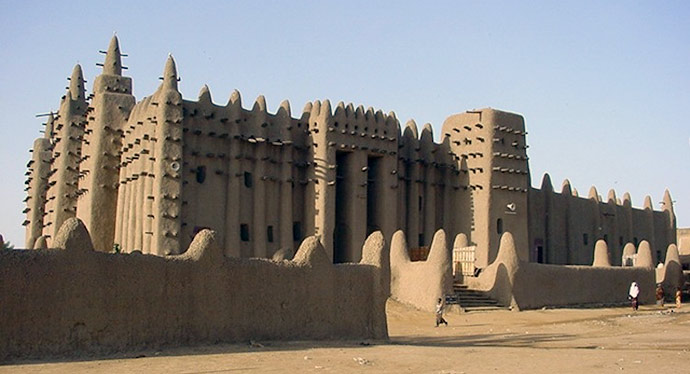
The Great Mosque of Djenné is considered to be one of the finest achievements of the Sudano-Sahelian architectural style. The first mosque on the site was built around the 13th century, but the current structure dates from 1907.
El Transito Synagogue – Toledo, Spain
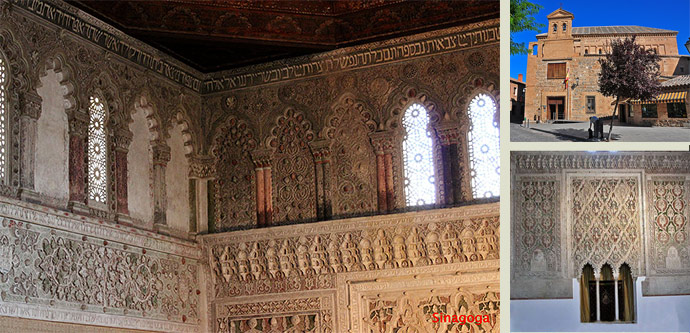
The Synagogue of El Transito is famous for its rich stucco decoration, which bears comparison with the Alcazar of Seville and the Alhambra palaces in Granada. It was founded by Samuel ha-Levi Abulafia in about 1356.
Great Mosque of Samarra – Samarra, Iraq
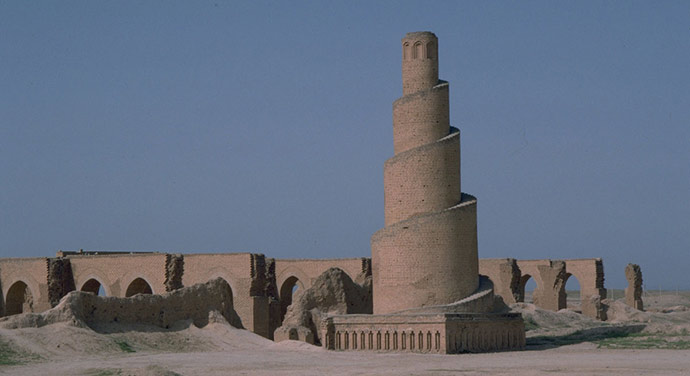
The Great Mosque of Samarra was commissioned in 848 and completed in 851 by the Abbasid caliph Al-Mutawakkil. Its minaret, the Malwiya Tower reaches 52 meters high with a spiral ramp. The mosque was destroyed in 1278 after the Hulagu Khan invasion of Iraq. Only the outer wall and its minaret remain.
Old-New Synagogue – Prague, Czech Republic

The Old New Synagogue is Europe’s oldest active synagogue. It was completed in 1270 and was one of Prague’s first gothic buildings.
Chor-Minor Madrassah – Bukhara, Uzbekistan
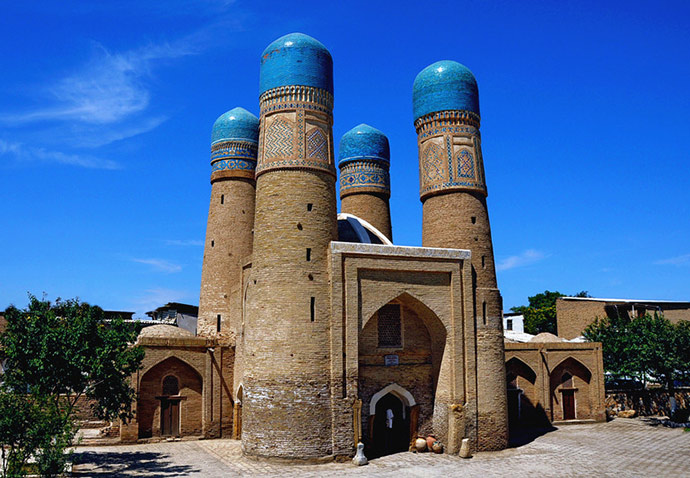
Chor-Minor Madrassah was built in 1807 and its name means “four minarets” in Tajik.
Europe’s wooden synagogues – ex-Polish-Lithuanian Commonwealth
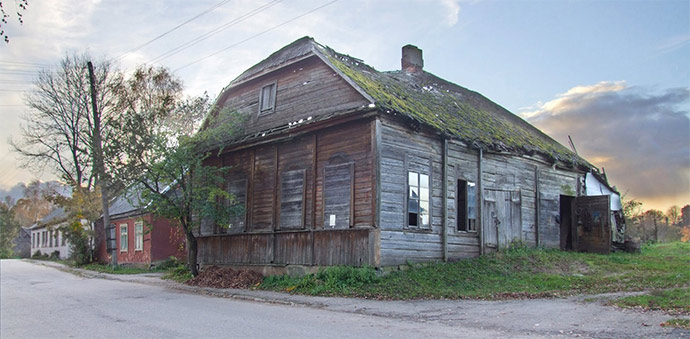
Wooden synagogues were a unique style of synagogue architecture that developed in Europe, less than 20 remain standing today.
Putra Mosque – Putrajaya, Malaysia

The Putra Mosque is the main mosque of Putrajaya, Malaysia. Construction of the mosque began in 1997 and was completed in 1999.
Ohel Jakob – Munich, Germany
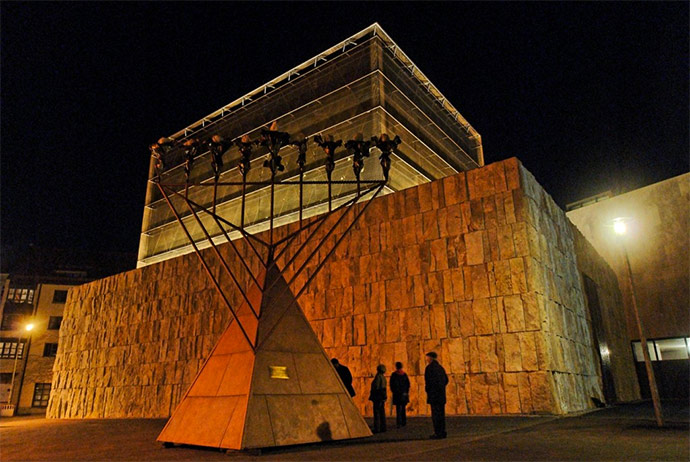
Ohel Jakob, is the main synagogue in Munich, it was inaugurated on 9 November 2006 on the 68th anniversary of the Kristallnacht.
Shrine of Hazrat Ali – Mazar I Sharif, Afghanistan
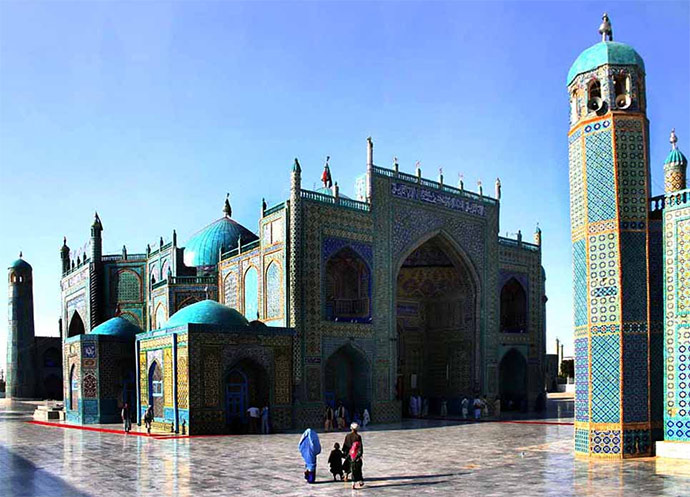
The Shrine of Hazrat Ali (also known as the Blue Mosque), is located in the heart of Mazar-i-Sharif, Afghanistan and it is the mazar building which gives the city its name. It is one of the reputed burial places of Ali ibn Abi Talib, cousin and son-in law of Prophet MuhammadSAW.
Jubilee Synagogue – Prague, Czech Republic

Also known as the Jerusalem Synagogue because of its location on Jerusalem Street. The synagogue was built in 1906, designed by Wilhelm Stiassny and named in honor of the silver Jubilee of Emperor Franz Joseph I of Austria. The synagogue is designed in Moorish Revival form with Art Nouveau decoration, especially in the interior.
Camili Mosque – Camili, Turkey

Western Wall Synagogue – Jerusalem, Israel
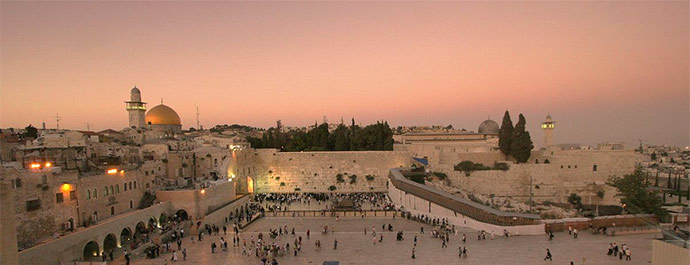
The Western Wall is located at the foot of the western side of the Temple Mount. It is a remnant of the ancient wall that surrounded the Temple’s courtyard, and is the most sacred Jewish site outside of the Temple Mount itself (where the al-Aqsa complex stands today).
Al-Masjid al-Haram – Mecca, Saudi Arabia
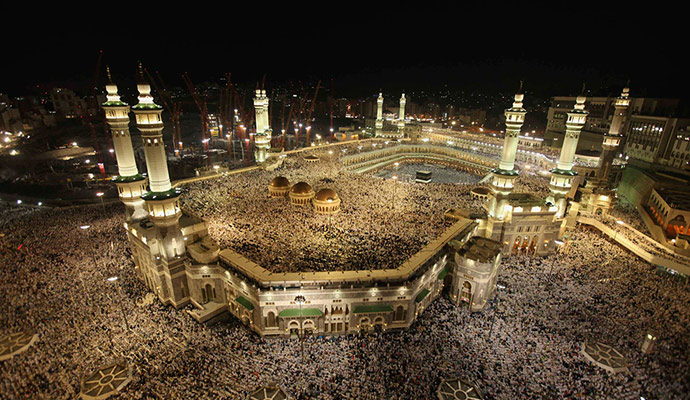
Is the largest mosque in the world and surrounds Islam’s holiest place, the Kaaba. One of the Five Pillars of Islam requires every able Muslim to perform the Hajj pilgrimage which includes circumambulation of the Kaaba. The current structure covers an area of 356,800 square metres and can accommodate up to two million worshipers during the Hajj period. Unlike other mosques men and women are not segregated and can worship together.


Thank you for these beautiful images. One note, however, Jerusalem is not in Israel. The international community and the UN considers the status of Jerusalem to be in dispute and its status is still part of the “peace” process Thanks
Wow. Maybe the international community, and the UN can rewrite the Torah, the Tanakh and the Bible while they’re at it.
Pingback: WanderlusterLiza